To improve Google rankings, first measure where you stand in Search Console, then fix anything that stops pages being crawled or indexed. After that, score every possible improvement by impact and effort, start with pages already close to page one, make content more useful than the alternatives, and give each change a few weeks before judging it.
- There is no secret or paid route to higher organic rankings. Google says so directly.
- The biggest wins usually come from pages that already rank on page two, not from new pages.
- Google says some changes take effect in hours and others take months; judge results over weeks.
What moves rankings, and what doesn’t
Much ranking advice is folklore. Before spending time or money, check it against what Google itself documents.
| Belief | What Google says | What to do instead |
|---|---|---|
| You can pay Google to rank higher | You can’t pay to be crawled more often or ranked higher in organic results | Spend on fixing and improving pages |
| Longer content ranks better | Google has no preferred word count | Write as long as the reader’s question needs |
| Meta keywords help | Google Search doesn’t use the keywords meta tag | Write a clear title and description |
| Schema markup boosts rankings | Valid markup doesn’t guarantee rich results | Add it for clarity; don’t expect a jump |
| AI-written content is penalised | Using AI isn’t against the rules; mass-producing low-value pages is | Use any tool, but publish only pages that help |
The sources: How Google Search works (no paying to rank), Creating helpful content (no preferred word count), the SEO Starter Guide (meta keywords), the structured data guidelines and the guidance on AI-generated content.
Measure your baseline in Search Console
You can’t prioritise without knowing where you stand. In Google Search Console, open the Performance report, set the date range to the last three months, and export queries and pages with their clicks, impressions, click-through rate (CTR) and average position.
Search Console now also reports how often your pages appear in Google’s AI features, as impressions in a separate report; Google AI Overviews and AI Mode: how to control them and report on them shows how to read it next to the Performance report.
From that export, build three short lists:
- Close to page one: queries where a page averages roughly position 8 to 20, with meaningful impressions. These are usually the cheapest gains. (This range is our working rule, not a Google threshold.)
- Seen but not clicked: pages with many impressions and a low CTR for their position. Often a title or snippet problem.
- Money pages: the pages that bring enquiries or sales, whatever their rankings today.
Save this export with the date. It is the “before” you’ll compare against.
Fix what blocks rankings first
If a page isn’t indexed, nothing else on this list can help it. Check your money pages and “close to page one” pages in Search Console’s URL Inspection tool, and check the Page indexing report for patterns such as accidental noindex tags, wrong canonicals or server errors.
If you find problems, or haven’t checked in a while, conduct a technical SEO audit before doing anything else. It covers crawling, indexing, Core Web Vitals and mobile in order; if speed is the weak spot, Core Web Vitals: LCP, INP and CLS shows the fixes that usually help most.
Score every opportunity by impact and effort
Most sites have more possible improvements than time. The matrix at the top of this guide sorts them. Give each task two scores from 1 to 3:
- Impact: how many valuable pages or visits it affects, and how close those pages are to a meaningful gain.
- Effort: hours, cost and risk, including whether you need a developer.
| Task | Impact (1–3) | Effort (1–3) | Quadrant |
|---|---|---|---|
| Remove a robots.txt line blocking /services/ | 3 | 1 | Quick win |
| Rewrite titles on five page-two service pages | 3 | 1 | Quick win |
| Rebuild a slow page template | 3 | 3 | Major project |
| Add missing alt text across the blog | 1 | 1 | Fill-in |
| Redesign the homepage “for SEO” | 1 | 3 | Deprioritise |
Do quick wins this week, schedule one major project at a time, batch fill-ins into a quiet afternoon, and drop the rest unless something changes.
Improve the pages that are already close
For each page on your “close to page one” list, search its main query yourself and compare your page honestly with the results above it. Ask what a searcher would still need after reading yours. Then work through four improvements, in this order.
1. Match the intent. If the top results are price guides and yours is a sales page, the mismatch matters more than any wording. Change the format before the words.
2. Make the title and snippet earn the click. Google uses several sources for the title link, including your <title>, your main heading and other prominent text, and truncates long titles to fit the screen (Title links). It may use your meta description as the snippet when it describes the page better than the page text does (Snippets).
Before
Services | Example Plumbing
Welcome to our website. We offer a wide range of services for all your needs.
After
1Drain Unblocking in Leeds from £90 2| Example Plumbing
3Same-day drain unblocking across Leeds. Fixed prices from £90 including call-out, 4quoted before we start. Fully insured.
- Service and place first, the words the searcher typed, before the truncation point.
- Brand last, where it can be cut without losing meaning.
- The answer in the description: what, where, how much.
- A reason to trust, stated as a checkable fact rather than an adjective.
3. Fill the gaps. Add what searchers need and competitors cover better: prices, steps, comparisons, photos of real work, answers to follow-up questions. Put the direct answer at the top.
4. Update and date it. Correct outdated facts and show when the page was last reviewed. Don’t change dates without real changes.
Make content people-first, and show who wrote it
Google’s guidance on helpful, reliable, people-first content suggests judging content by “Who, How, and Why”: who created it, how it was made, and why it exists. It also describes E-E-A-T (experience, expertise, authoritativeness and trustworthiness) as the qualities its systems try to identify.
For a small business, that translates into concrete steps: name the person who did the work or wrote the page, show real photos and examples from your jobs, explain how you reached a recommendation, and write for a customer deciding, not for a search engine. We recommend asking of each page: would someone who found this from a friend’s link be glad they read it? The same pages are the ones AI answers can quote: see how to get cited in AI answers for the page-level checklist.
Strengthen internal links and earn mentions
Internal links tell Google which pages matter and how they relate. Link from your strong pages to the pages you want to rise, using anchor text that describes the destination, in real <a href> links Google can follow (Make your links crawlable). One relevant link in a sentence is worth more than a footer full of them.
External mentions come from being worth mentioning: local press, suppliers, trade associations, community sponsorships, useful guides other people cite. Avoid buying links or swapping them at scale; Google’s spam policies treat link schemes as spam.
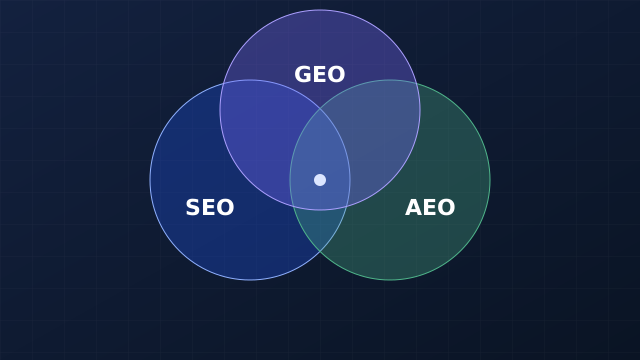
The same groundwork improves your chances in AI answers, because Google’s AI features build on regular Search. See SEO vs AEO vs GEO for how the layers connect, and mentions, citations and recommendations in AI answers for how to measure whether AI tools name and link to you.
- Money: improving five pages that already rank on page two usually costs far less than producing new content from scratch. That is our recommendation, based on effort, not a promise of results.
- Time: plan in quarters, not days. Google’s own guide says to wait a few weeks before judging a change.
- Risk: avoid anyone guaranteeing positions. Google says no one can.
Give changes time, then measure properly
Google’s SEO Starter Guide says some changes take effect in a few hours and others could take several months, and suggests waiting a few weeks before assessing whether your work helped. Plan for that:
- Log each change with its date and the pages affected.
- Compare the same date ranges before and after (for example, four weeks against the four weeks before the change), and against the same period last year if your business is seasonal.
- Look at clicks and enquiries, not just positions. A ranking that brings no customers isn’t a win.
- Week 1: export your Search Console baseline and build the three lists.
- Weeks 1–2: check indexing for money pages; fix any blockers.
- Weeks 2–3: score all tasks on the matrix; do the quick wins.
- Weeks 3–6: improve the five closest pages: intent, title and snippet, gaps, update.
- Weeks 6–8: add internal links from strong pages to those five.
- Weeks 8–12: start one major project; compare results against the baseline.
Your next step
Export your Search Console baseline today and pick your five “close to page one” pages. To see technical blockers and page-level fixes for your whole site in one list, sorted by priority, try the free 2-week AIRankSurge beta.
Sources and methodology
- Google Search Central, How Google Search works: no paying to rank; no guarantee of crawling or indexing.
- Google Search Central, SEO Starter Guide: meta keywords, how long changes take.
- Google Search Central, Creating helpful, reliable, people-first content: Who, How and Why; E-E-A-T; no preferred word count.
- Google Search Central, Title links and Snippets.
- Google Search Central, Make your links crawlable and Spam policies.
- Google Search Central, Structured data general guidelines and guidance on AI-generated content.
Methodology. This guide is based on the Google documentation above, read and checked on 28 October 2026. The position range, scoring scale and 90-day plan are our recommendations, not Google rules, and we haven’t run a controlled test of them. All business examples are invented to show structure.
Reviewed .