A mention is an AI answer naming your business. A citation is a link to one of your pages as a source. A recommendation is the answer favouring you over alternatives. They are different outcomes, they depend on different things, and each can happen without the others, so measure them separately and record the date, platform and exact question for every observation.
Three things people call "being in AI"
| Mention | Citation | Recommendation | |
|---|---|---|---|
| What it is | Your business is named | One of your URLs is shown as a source | The answer prefers you |
| Needs a link? | No | Yes | No |
| What it mostly tests | Whether the model knows you exist and where you fit | Whether a specific page was found, was useful and was usable as a source | Whether your reputation and fit stand out for this question |
| Can send traffic? | Only if the reader searches for you | Yes, directly | Indirectly, through trust |
| Typical weak spot | Thin or inconsistent information about the business | Pages that can't be crawled, indexed or quoted cleanly | Few credible reviews, comparisons or third-party mentions |
- A mention with no link builds awareness but gives you nothing to click.
- A citation is the one you can trace to a page and fix at page level.
- A recommendation is the hardest to earn and the most valuable, and no one can guarantee it.
What Google says it takes to appear
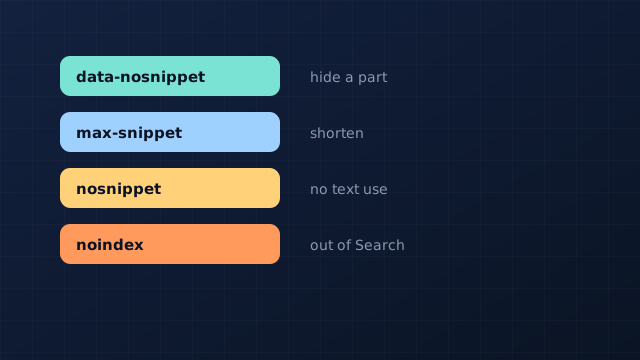
For Google's own AI features, the rules are plainer than most advice suggests. Google says AI Overviews and AI Mode have no additional requirements beyond a page being indexed and eligible to show in Search with a snippet, and that you don't need special files or markup. It also says both features may run several related searches across subtopics, a technique it calls query fan-out, which means a page can be pulled in for a sub-question you never targeted directly.
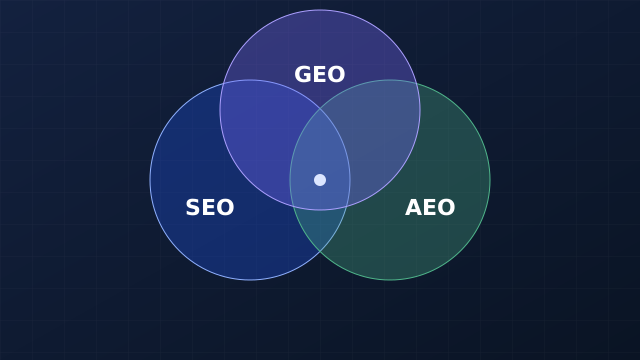
Google adds that appearing is never guaranteed even when a page meets every requirement. In practice that points to the same fundamentals covered in our guide to SEO vs AEO vs GEO: pages that can be crawled, indexed and quoted, with clear, original answers. AI assistants from other vendors have their own rules, so see AI crawlers and robots.txt to check you are not blocking the search bots that feed them.
How to measure each one honestly
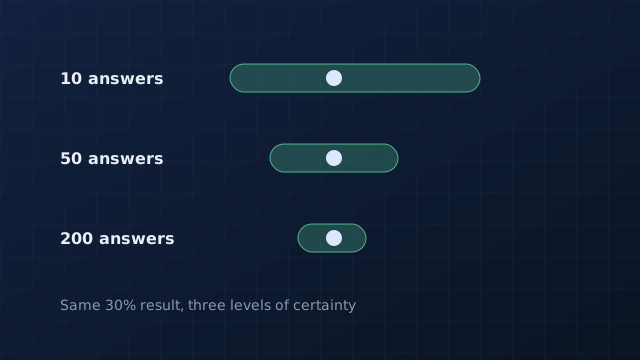
AI answers vary from run to run and from person to person. We recommend treating any single result as one observation, not a ranking. The full method, with sample sizes and how to show the uncertainty, is in how to run an AI visibility audit. A trustworthy measurement has these parts:
- Write a fixed list of questions your customers really ask, in their words. Keep it the same between checks.
- For each platform, record the date, the exact question and the full answer, not a summary.
- Mark each answer separately for mention, citation (which URL) and recommendation (over whom).
- Repeat on a regular schedule and compare trends over weeks, not single answers.
- State what you sampled. A sample of questions on named platforms is not "everything AI says about you".
For Google's features, Google says AI feature appearances are counted in the Search Console Performance report under the Web search type, and its Generative AI performance report now shows impressions in AI Overviews and AI Mode by page, country and device. Neither tells you the wording of the answers; the checklist above covers that gap.
What to improve for each one
- For mentions: make sure your business is described consistently and accurately on your own site and on credible third-party pages, including who you serve and where.
- For citations: make the page that answers the question easy to crawl, index and quote: a direct answer near the top, specific facts, and clear headings. The page-by-page checklist for getting cited shows how.
- For recommendations: earn them. Real reviews, honest comparisons and original information give an answer a reason to prefer you. There is no markup or trick that forces one.
Start with whichever of the three is weakest in your own check, not with the one that sounds most impressive. To see how this work fits the rest of your search presence, read the guide to improving Google rankings, because the same pages usually serve both.
Next action: write ten real customer questions, run them on the platforms your customers use, and score each answer for the three signals. You will learn more from that sheet than from any single number.
Sources and methodology
- Google Search Central: AI features and your website, for AI Overviews and AI Mode eligibility, query fan-out and Search Console reporting.
Methodology. The definitions and the measurement checklist are our own framework, not a Google or industry standard. They are not based on a study, and the example answer is invented. Google's statements are from its documentation, read on 3 November 2026.
Reviewed .